
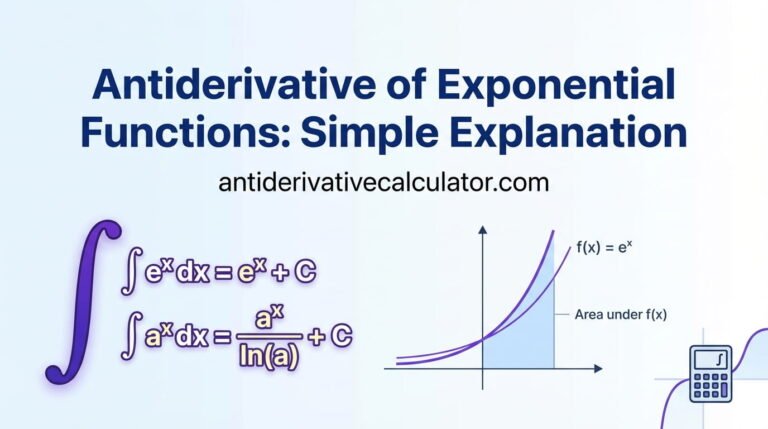
Antiderivative of Exponential Functions: a^x, 2^x, 10^x and More
The antiderivative of a^x is a^x/ln a + C. See where ln a comes from, work through 2^x, 10^x, (1/2)^x and a^(kx), and solve a real growth problem.
Step-by-step lessons on the main ways to integrate: the power rule, u-substitution, integration by parts, and trig and exponential rules.
The antiderivative of a^x is a^x/ln a + C. See where ln a comes from, work through 2^x, 10^x, (1/2)^x and a^(kx), and solve a real growth problem.
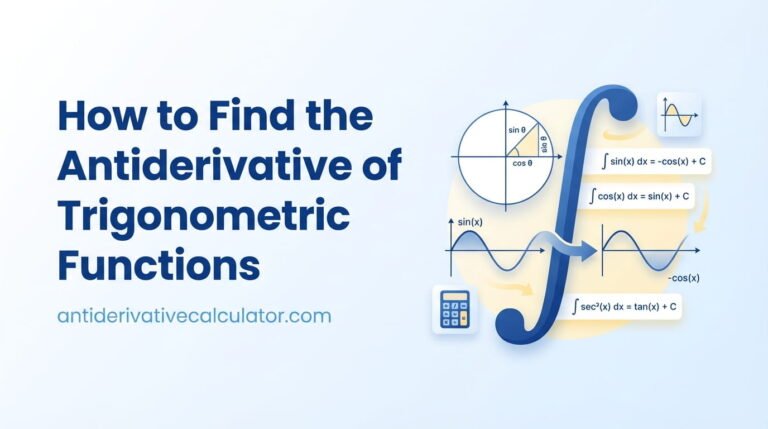
Antiderivatives of all six trig functions, sin, cos, tan, cot, sec and csc, with a short proof for each, plus sec², sin², tan² and worked examples.
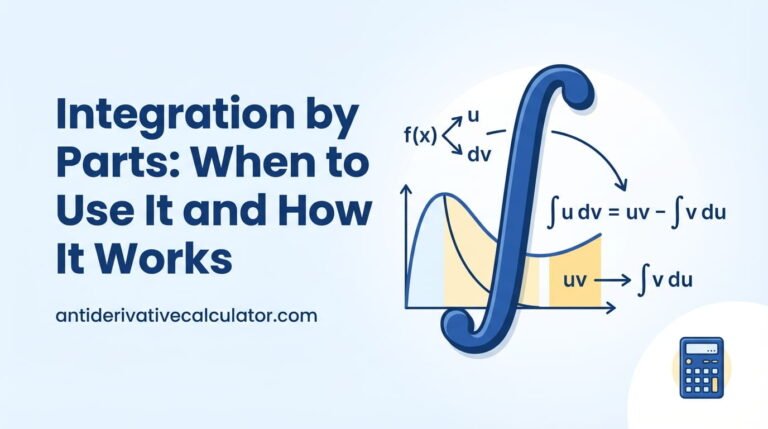
Learn the integration by parts formula, how to choose u with LIATE, the tabular method, and 8 worked examples with answers you can check.
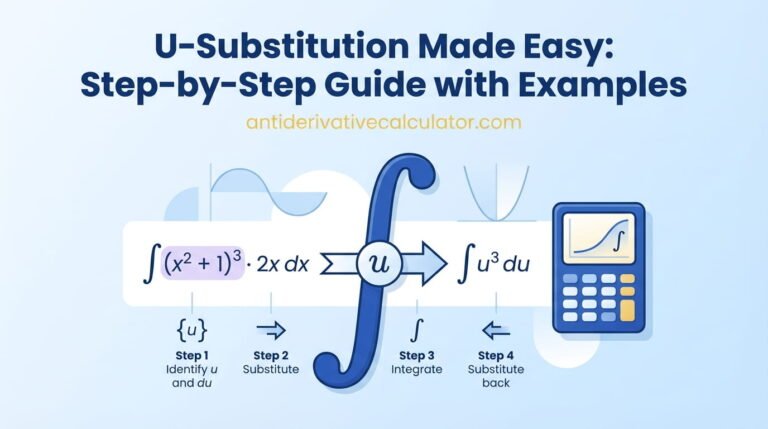
Learn how to do u-substitution step by step. Spot the 5 patterns that tell you what u should be, handle definite integrals, and practice with answers.
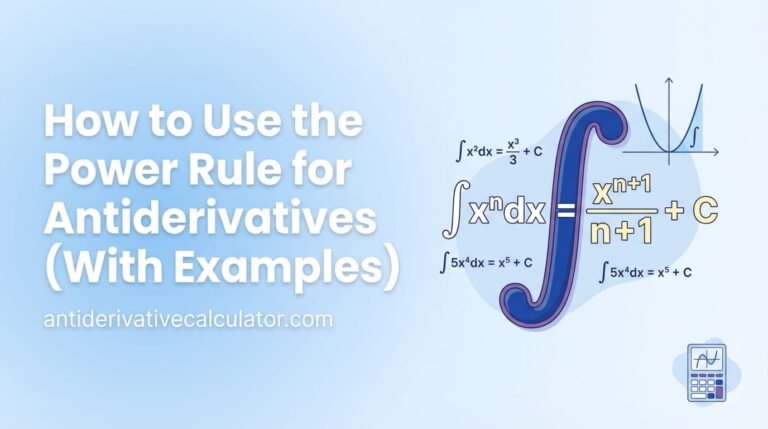
The power rule for integration: add 1 to the exponent and divide. Learn it in 5 levels, including negative powers, roots and fractions, with practice.